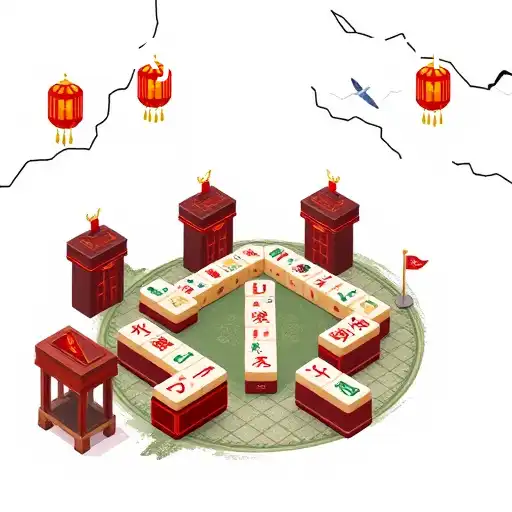
Mahjong: A Cultural Phenomenon
Mahjong is a captivating game of skill, strategy, and calculation that has been an integral part of Asian culture for centuries. Originating in China during the Qing dynasty, Mahjong has evolved into a global pastime enjoyed by millions of players. While traditional Mahjong has deep roots in cultural and familial gatherings, it has also found a modern counterpart in online platforms such as JiLi333.
The Origins and Evolution of Mahjong
The origins of Mahjong are shrouded in mystery, with legends attributing its creation to Confucius in 500 BC, while others suggest it was invented by Chinese soldiers to pass time during the Taiping Rebellion. Its name, translating to "sparrow," reflects the chirping of tiles as they are shuffled.
Originally, Mahjong was a game reserved for the elite, with elaborate sets made from ivory and bamboo. Over time, it permeated through all social strata, becoming a staple in both rural and urban gatherings. As the game crossed Chinese borders, it gained a foothold across East Asia and subsequently around the world.
Mahjong in the Modern Era
In today's global society, Mahjong has adapted to digital landscapes, allowing a new generation of gamers to explore its nuances. The virtual realm provides these players accessibility without geographical constraints, with platforms like JiLi333 offering a contemporary way to engage with the game. By providing online versions of Mahjong, JiLi333 ensures the continuation of traditional gameplay while incorporating modern technology and interfaces.
The Technological Leap: JiLi333
JiLi333 is pivotal in bringing Mahjong into the digital age. By offering various game styles and rule variations, the site caters to a broad audience, from novices to seasoned experts. The convenience of playing online allows users to connect globally, sharing strategies and engaging in competitive play.
JiLi333 offers a user-friendly interface that mimics the traditional Mahjong experience. The virtual tiles replicate the feel of physical pieces, nurturing the nostalgia of face-to-face gameplay while embracing the benefits of digital interaction. The platform also includes tutorials, making it accessible for beginners learning the ropes of Mahjong.
Variations of Mahjong
Mahjong is not a singular entity but rather is comprised of various forms that differ across regions. The four-player game typically employs a set of 144 tiles based on Chinese characters and symbols, but regional rules introduce differences in tile composition and the number of participants.
Chinese Mahjong
Known as "Traditional Mahjong," this variant is widely played across mainland China, characterized by the incorporation of flower and season tiles. The goal remains consistent: build complete sets of tiles, winning with sequences and pairs.
Japanese Mahjong (Riichi)
Riichi Mahjong is a competitive version with additional elements such as call and discard rules, involving strategic complexity. Popular in Japan, it introduces the concept of "Riichi" - declaring a ready hand - adding a layer of tactical depth to the game.
American Mahjong
Distinctive to the United States, American Mahjong includes 'joker' tiles and features a defined card of winning combinations issued annually by the National Mahjong League. This variant prioritizes individuality with specific set patterns while maintaining traditional mechanics.
The Cultural Resonance of Mahjong
Beyond its entertainment value, Mahjong carries immense cultural significance. It is a communal activity fostering social bonds, often forming a pivotal element of familial traditions during festivals and gatherings. The game's intricate tile designs reflect deep-seated cultural symbols, each telling a story of its heritage.
Additionally, Mahjong has been immortalized in various forms of media, including literature, cinema, and digital art. Its influence seeps into narrative structures, symbolizing the intersection of destiny and strategic calculation.
Mahjong as a Social Connector
Mahjong acts as a bridge across generations, illustrating the blend of ancient customs and modern influences. As younger players engage with Mahjong through platforms like JiLi333, the game maintains its relevance while evolving to meet contemporary expectations.
Social interaction is at the heart of Mahjong gameplay, a factor that platforms leverage by offering multiplayer modes that connect global users. JiLi333 serves as a venue where enthusiasts can participate in international tournaments and local meetups, spotlighting the game's universal appeal.
Conclusion: Preserving the Legacy
The story of Mahjong is one of cultural preservation and adaptation. Through the ages, it has managed to stay relevant by continuously evolving. Online platforms such as JiLi333 ensure Mahjong thrives in this digital era, providing opportunities for new players to engage with this cherished game. The consistent innovation within the platform keeps Mahjong dynamic, safeguarding its cultural legacy for future generations.